

Instructor Research
Research Results
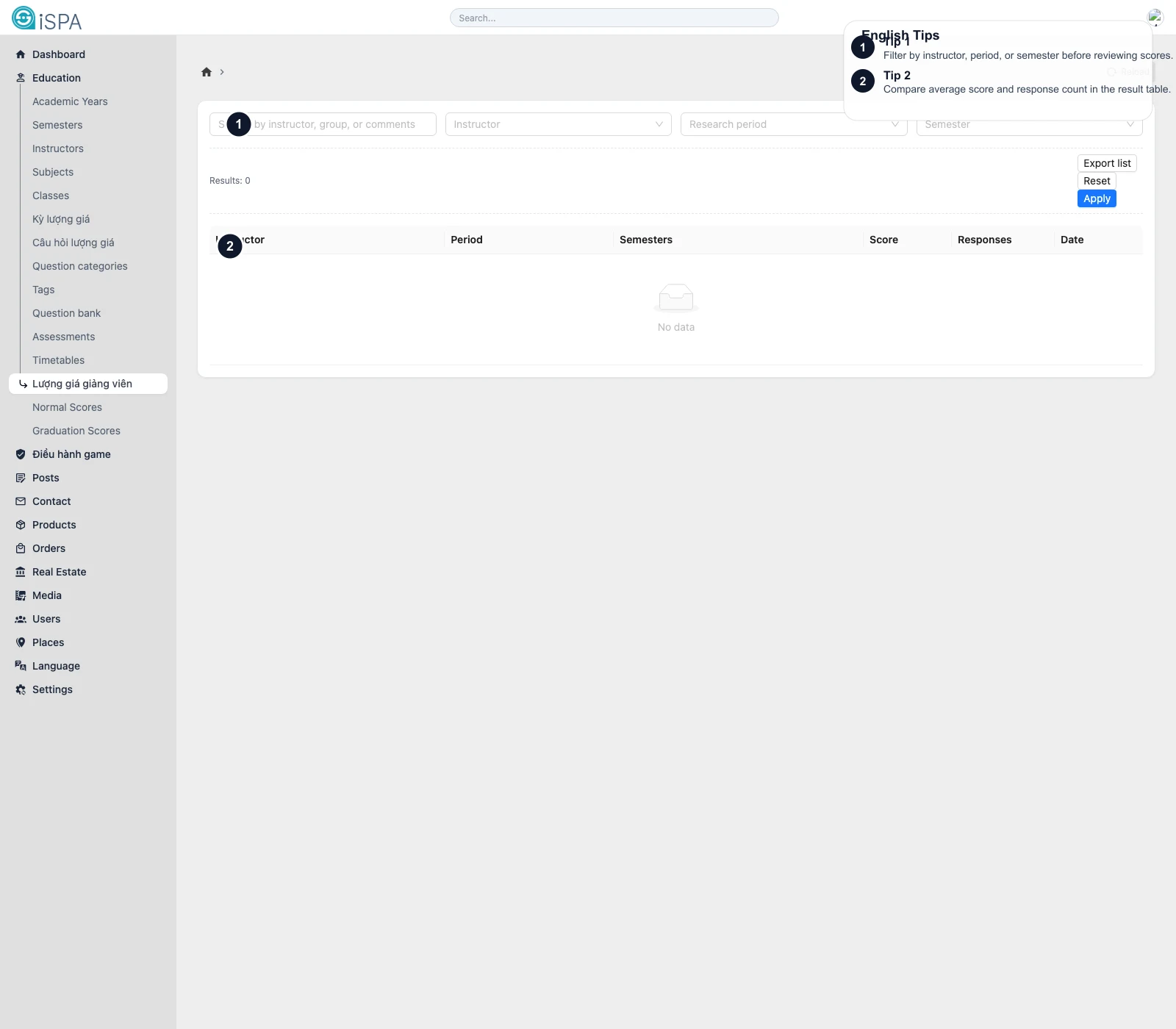
Illustration captured from the local environment on March 14, 2026. The English callouts highlight the filter area, export action, and result table so you can immediately see where reporting work happens.
Use this page to review instructor-evaluation results after responses have already been collected. This is for reading outcomes and exporting reports, not for creating questions or opening new periods.
What this screen answers
- how an instructor is currently performing in the evaluation results
- which research period already has response data
- how many responses support each score
- which semester the result belongs to
If you need reporting or outcome review, this is the correct screen.
What appears on the page
- search
- instructor filter
- research period filter
- semester filter
Export XLSXResetApply- the result table
Key columns usually include:
- instructor
- research period
- semester
- average score
- response count
- date
How to read the table correctly
Average score
This is the average result for the row. It helps with relative comparison across instructors or periods.
Responses
Response count tells you how much evidence sits behind the score. A high score with very few responses should be read more carefully than a stable score with stronger participation.
When should you export?
Use Export XLSX when:
- the academic office needs a report
- you want a filtered handoff for people outside admin
- you need to archive a semester-specific result set
Filter first, then export. That usually produces cleaner files.
Recommended workflow
- Filter by semester.
- Narrow by instructor or research period when needed.
- read average score and response count together.
- export the filtered set if you need to share it.
What this screen does not do
This is not the place to:
- edit the question set
- change the survey period
- reassign the instructor or subject
If the setup needs correction, go back to Research Periods.